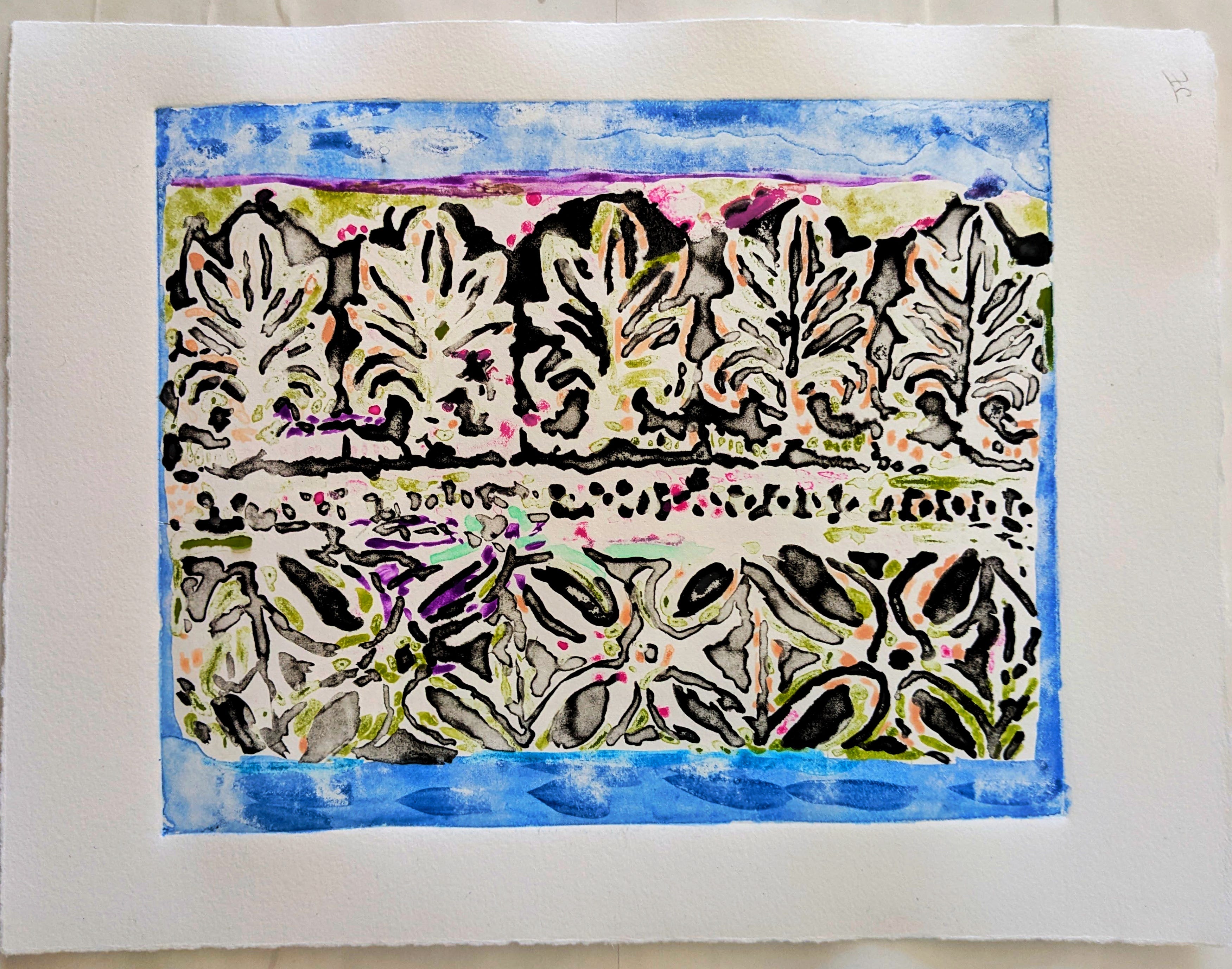
Watercolor monotype
after an Egyptian stone molding fragment in the Metropolitan Museum of Art

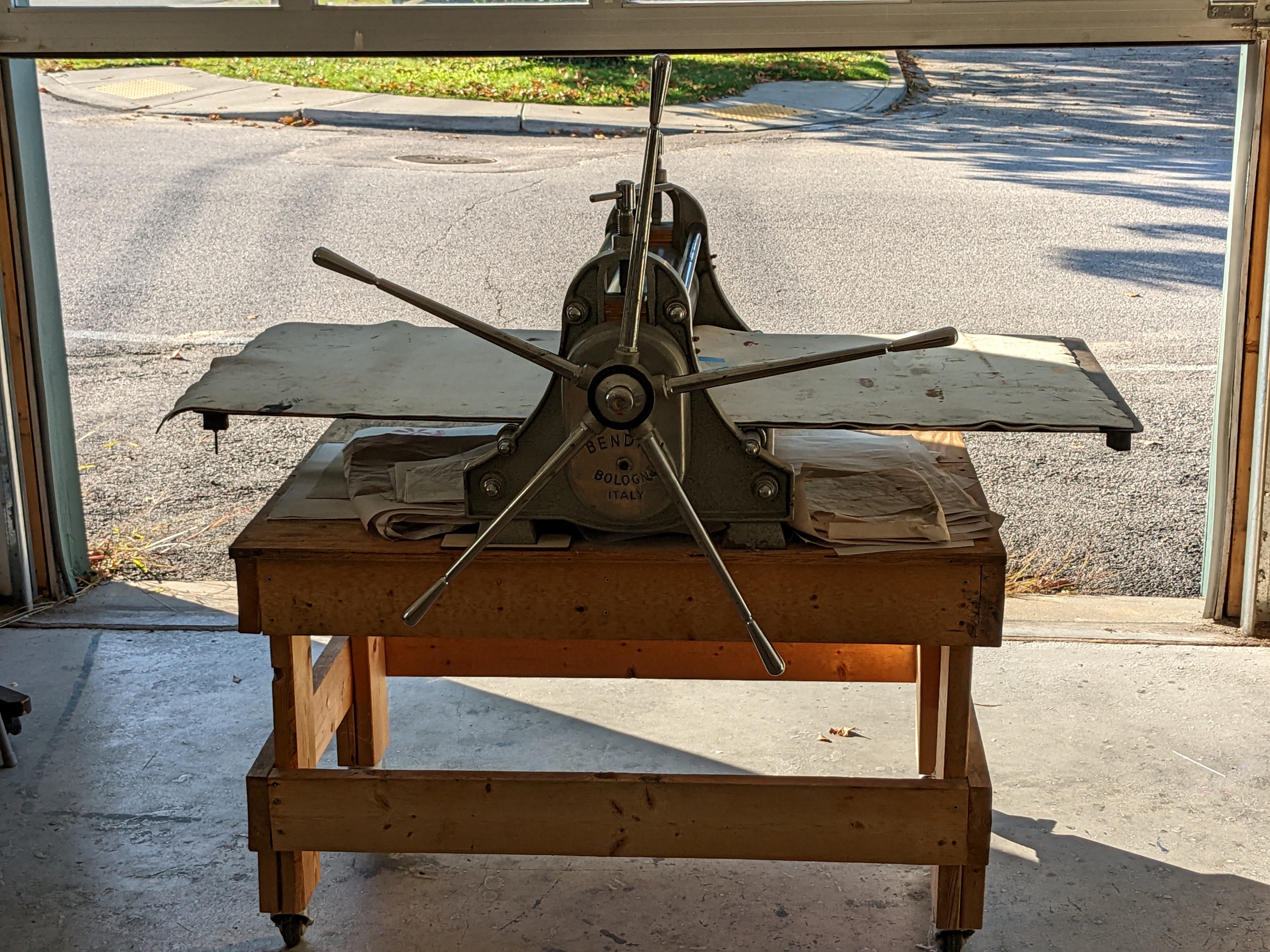
I enrolled in sessions of printmaking at the Jamestown Art Center this past fall. The teacher, Karen Dolmanisth, helped me SO MUCH and was so supportive of my work, even though (or perhaps because?) what I set out to do was so different in approach from what she was teaching and what other students in the classes pursued. I wanted to work on mostly representational watercolor monotypes (do a watercolor painting on a sanded plexiglass plate, then run the plate through an etching press sandwiched with a dampened piece of paper to soak up the pigment), while most of the other students were rolling up Sintra board and smooth plexiglass plates with water soluble Akua intaglio inks and making use of all sorts of stenciling and collaging techniques to produce beautiful abstract work. Sometimes students scratched into the plates to produce rich drypoint intaglio effects. One confusing thing that came up in the classes: what’s the difference between a monotype and a monoprint? Let’s see if I can get this right: a monoprint is a one-of-a-kind print, but it has an underlying repeatable matrix that would be recognizable across a series of prints. A monotype is a one-of-a-kind print from a plate that does NOT have a repeatable matrix etched or scratched onto it.
Conventional printmaking — be it relief printing (woodblock, linoleum, letterpress), intaglio (etching, mezzotint, drypoint, etc.), or planographic processes (lithography and silk screen printing) — is about making exactly repeatable (i.e., NOT one-of-a-kind) prints which are numbered into an edition.
Monotypes and monoprints are prized by artists because of the surprise factor — what will the press yield this time? — and also for the experimental, iterative approach to image-making that they afford. And of course, because they are one-of-a-kind.
Here is a watercolor monotype (9”x12” plexiglass plate) that I printed (on Stonehenge paper) in November on the Jamestown Art Center etching press. The image is inspired by an Egyptian limestone molding fragment in the Metropolitan Museum of Art. After goosing up the colors in the photograph, I don’t think this looks half bad.
Ocean State Libraries has several books entered under the subject heading Prints — Technique — History if you’re interested in a deeper intro to printmaking. Or you could buy this book through the independent bookstores portal (I may earn a small commission if you purchase through this link).
Here is a photo I took of the etching press at the Jamestown Art Center: